
People with disabilities sometimes become involved in the criminal or juvenile justice system and may encounter disability-related barriers throughout the process. Regardless of disability, every person has legal rights and deserves equal access to justice.
Protection & Advocacy (P&A) works to protect the disability-related rights of individuals involved in the criminal and juvenile justice systems. We advocate for equal treatment, access to reasonable accommodations, and services that support fair and effective outcomes.
In addition to protecting rights, P&A promotes proactive planning through Individual Justice Planning (IJP), a tool that helps identify disability-related supports and accommodations that may reduce barriers and improve interactions within the justice system.
Criminal Justice
Everyone Has Rights
People with disabilities can become involved in the criminal or juvenile justice system for many reasons. Regardless of disability or the charges involved, every person has the same constitutional rights throughout the criminal justice process.
These rights include:
- The right to remain silent.
- The right to an attorney.
- The right to a fair and impartial trial.
- The right to confront and question witnesses.
- The right to present witnesses and evidence.
- The right to appeal a conviction when permitted by law.
- The presumption of innocence until proven guilty.
If you or someone you know is involved in the criminal justice system, it is important to ask for an attorney and speak with them before answering questions. An attorney's role is to protect the individual's legal rights, explain the legal process, answer questions, and provide advice throughout the case.
If you or someone you know is involved in the criminal justice system, it is important to request an attorney as soon as possible.
An attorney can:
- Explain the legal process.
- Help you understand your rights and options.
- Answer questions about your case.
- Advocate on your behalf.
- Help ensure your rights are protected throughout the process.
If you want an attorney, clearly state that you wish to have one before answering questions.
Important: The information on this page is provided for educational purposes and is not legal advice. If you are involved in a legal matter, you should consult with an attorney.
People with disabilities retain their civil and legal rights while interacting with law enforcement, courts, detention facilities, jails, prisons, probation, and other parts of the justice system.
Depending on an individual's disability, reasonable accommodations may be available to help ensure equal access to programs, services, communication, and participation throughout the justice process.
Examples of accommodations may include:
- Plain language or simplified communication.
- Sign language interpreters or other communication supports.
- Assistive technology or communication devices.
- Additional time to understand information or respond.
- Other accommodations based on an individual's disability-related needs.
For more information on accommodations, visit our resource Accommodations in the Courtroom.
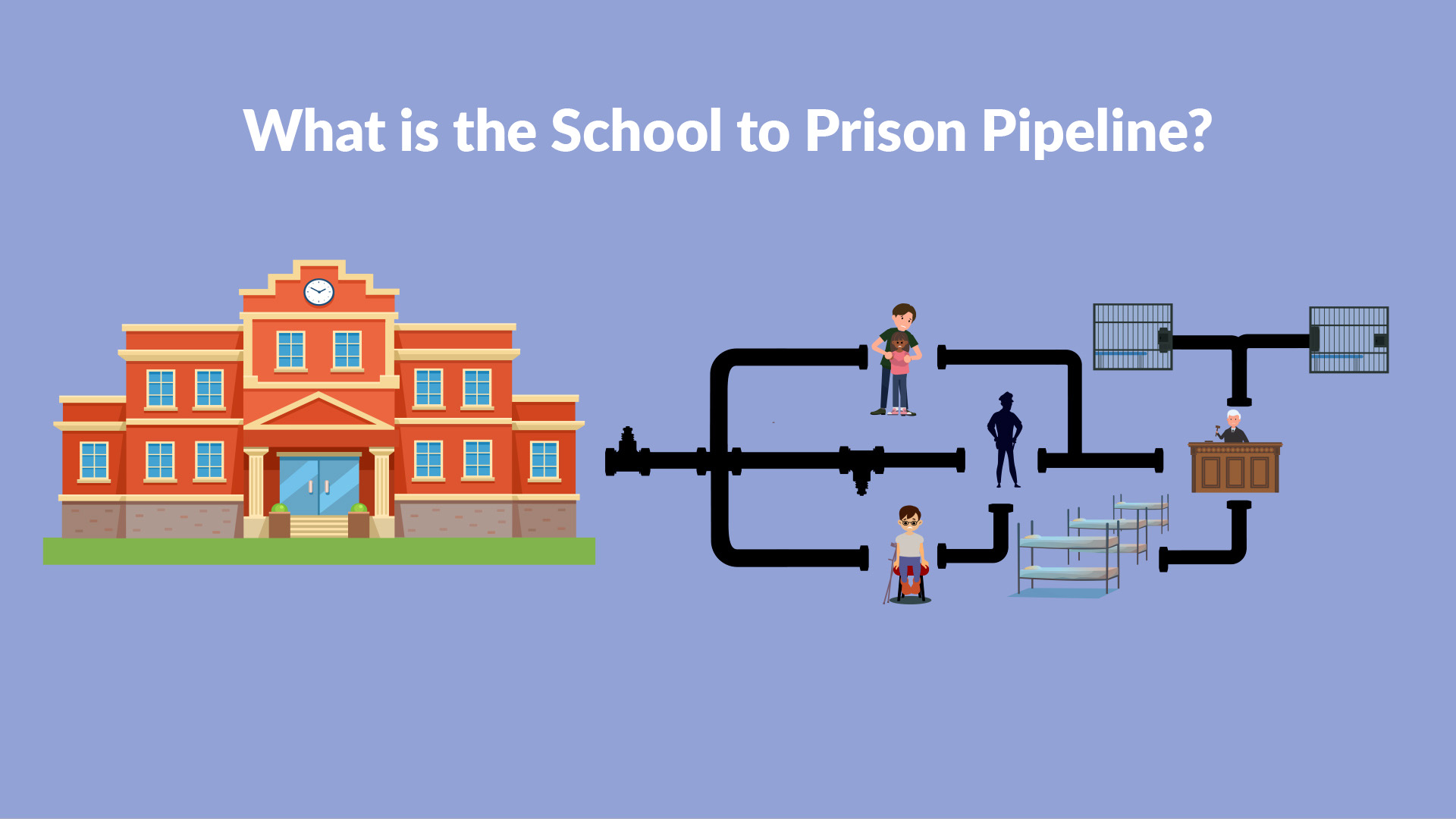
The school-to-prison pipeline describes the pattern in which school policies and practices systematically discipline some students more harshly or more often than others, increasing their likelihood of involvement with the juvenile or criminal justice system.
Students with disabilities are disproportionately affected and may face suspension, expulsion, or referrals to law enforcement for behaviors related to their disability. Providing appropriate supports, accommodations, and positive interventions can help keep students engaged in school and reduce unnecessary justice involvement.
Video Resource: School to Prison Pipeline
Individual Justice Planning
An Individual Justice Plan (IJP) is a voluntary planning tool designed to identify an individual's disability-related strengths, needs, supports, and accommodations before challenges occur.
The goal of an IJP is to improve communication, reduce misunderstandings, and help others understand how a person's disability may affect interactions within the criminal or juvenile justice system.
An Individual Justice Plan can:
- Identify disability-related support needs.
- Document effective communication strategies.
- Recommend reasonable accommodations.
- Provide important information for law enforcement, attorneys, courts, or service providers.
- Help reduce unnecessary justice involvement.
- Promote accountability while recognizing disability-related needs.
An Individual Justice Plan does not replace legal representation or court proceedings. Instead, it serves as an additional resource that can help support better outcomes.
How Protection & Advocacy May Be Able to Help
Protection & Advocacy may be able to assist individuals with disabilities who are experiencing disability-related issues within the criminal or juvenile justice system.
Depending on the circumstances, P&A may:
- Advocate for disability-related rights.
- Provide information and resources.
- Help identify disability-related accommodations.
- Assist with Individual Justice Planning.
- Provide referrals to other organizations or services when appropriate.
If you have questions about disability rights or Individual Justice Planning, contact Protection & Advocacy to learn more about available services.